

Introduction
Few situations are more frustrating for a cryptocurrency investor than seeing a substantial balance in a trading account but being unable to withdraw it.
You may have successfully deposited cryptocurrency, watched the account balance increase, and received regular communications from a supposed trading representative. Then, when you request a withdrawal, the platform suddenly tells you that additional requirements must be satisfied.
You may be asked to pay a:
- Withdrawal fee
- Tax
- Verification charge
- Security deposit
- Liquidity fee
- Compliance charge
- Account-unlocking fee
Sometimes the platform claims the payment is required before your cryptocurrency can be released.
This is an important warning sign.
A blocked withdrawal does not automatically prove that a platform is fraudulent. Legitimate exchanges can experience compliance reviews, account restrictions, technical problems, or other issues.
However, repeated demands for additional payments before allowing a withdrawal can be a strong indicator of an investment scam, particularly when combined with unrealistic profits, pressure from an account manager, or a platform that cannot be independently verified.
The U.S. Securities and Exchange Commission and other authorities have repeatedly warned investors about fraudulent crypto investment schemes and fake platforms.
When cryptocurrency has already been transferred, the most important question is not simply what the platform says your account contains.
The more important question is:
Where did your actual cryptocurrency go?
That question forms the foundation of a proper cryptocurrency recovery investigation.
What Does a Blocked Crypto Withdrawal Mean?
A blocked withdrawal can occur for legitimate reasons, fraudulent reasons, or circumstances that require further investigation.
A legitimate cryptocurrency exchange might temporarily restrict withdrawals because of:
- Identity verification
- Anti-money-laundering procedures
- Security concerns
- Suspicious account activity
- Technical problems
- Regulatory requirements
A fraudulent platform may use similar terminology to make its actions appear legitimate.
For example, the platform might claim:
“Your account requires additional liquidity verification before withdrawal.”
It might then request another cryptocurrency payment.
After that payment, the platform could demand another fee.
This cycle can continue indefinitely.
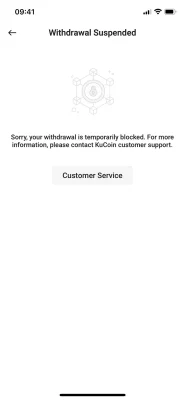
Warning Signs of a Potentially Fraudulent Platform
Be particularly cautious when several of the following occur together:
- The platform promises unusually high or guaranteed returns.
- Your displayed profits increase rapidly.
- Withdrawals are repeatedly rejected.
- You are asked to pay money before receiving your own funds.
- The platform cannot be independently verified.
- Communication occurs primarily through WhatsApp, Telegram, or other messaging apps.
- The representative pressures you to act immediately.
- Customer-support contacts change frequently.
- The website contains questionable regulatory claims.
- The platform’s corporate or licensing information cannot be independently confirmed.
A single warning sign does not establish fraud. Multiple indicators should, however, prompt careful investigation before sending additional money.
Step 1: Stop Sending Additional Funds
If a trading platform is blocking your withdrawal and demanding another payment, do not automatically send the requested funds.
This is especially important when the explanation involves:
- Taxes
- Government fees
- Wallet activation
- Blockchain release charges
- Account verification payments
- Anti-money-laundering deposits
- Insurance fees
A fraudulent platform can use one payment to justify the next.
The more money a victim sends, the greater the potential loss.
Instead, preserve the demand itself.
Save:
- The message requesting payment
- The requested amount
- The wallet address
- The date
- The stated reason
- The name of the representative
- Any invoice or payment instructions
These records may become important evidence.
Step 2: Preserve Your Evidence
Evidence preservation should happen before a platform disappears.
A fraudulent website can be taken offline with little warning.
A messaging account can be deleted.
An alleged account manager can stop responding.
Preserve as much information as possible, including:
Platform Information
- Website URL
- Platform name
- Domain information
- Account number or username
- Customer-support details
- Names used by representatives
Communication Records
- Emails
- WhatsApp conversations
- Telegram messages
- SMS
- Social-media messages
- Voice messages
- Written investment instructions
Financial Records
- Bank statements
- Exchange transaction histories
- Cryptocurrency purchase records
- Deposit confirmations
- Withdrawal requests
- Payment receipts
Blockchain Information
- Wallet addresses
- Transaction hashes
- TXIDs
- Cryptocurrency type
- Amount transferred
- Date and approximate time of each transaction
Do not delete conversations simply because they are embarrassing or appear irrelevant.
Even apparently minor details can sometimes help establish the chronology of a fraud.
Step 3: Determine Whether the Cryptocurrency Was Actually Transferred
A critical part of cryptocurrency recovery is distinguishing between a displayed account balance and an actual blockchain transaction.
Suppose a platform shows:
Account Balance: $400,000
That number does not necessarily mean $400,000 of cryptocurrency exists in an account controlled for your benefit.
A fraudulent website can potentially display arbitrary numbers.
The investigation should instead examine the actual cryptocurrency transfers.
For example:
Victim Wallet → Platform Deposit Address
The next question becomes:
What happened after the deposit?
Did the assets move to another wallet?
Were multiple deposits consolidated?
Did the funds reach a centralized exchange?
Were they converted into another cryptocurrency?
Did the assets move through additional addresses?
This is why transaction hashes and wallet addresses are so important.
Step 4: Conduct Blockchain Transaction Tracing
Public blockchains can provide valuable transaction information.
Depending on the blockchain, investigators may be able to examine:
- Sending addresses
- Receiving addresses
- Transaction amounts
- Timestamps
- Subsequent transfers
- Transaction relationships
- Consolidation patterns
- Potential exchange destinations
A basic transaction investigation might look like:
Wallet A → Wallet B → Wallet C → Wallet D
A more detailed analysis may determine whether Wallet D appears connected to a known cryptocurrency service.
Why Multi-Hop Tracing Matters
Fraudsters may move assets after receiving them.
Stopping an investigation at the first receiving address may therefore provide an incomplete picture.
A transaction trail might instead look like:
Victim → Fraudulent Platform → Intermediary Wallet → Consolidation Wallet → Exchange
Each step can provide additional information.
However, blockchain tracing does not automatically reveal the identity of a person behind an address.
Additional evidence and lawful investigative procedures may be required.
Step 5: Identify Exchanges and Other Services
One potentially important development is determining whether the cryptocurrency eventually reached an identifiable exchange or custodial service.
If the transaction trail points toward a known service, that information may provide an investigative endpoint.
Depending on the facts, a legal team may consider:
- Preservation requests
- Legal notices
- Exchange compliance communications
- Requests for information
- Subpoenas
- Court orders
- Civil litigation
- Coordination with law enforcement
The precise procedure depends on the jurisdiction and circumstances.
Identification Does Not Equal Recovery
Finding an exchange address does not mean that the exchange will automatically freeze or return the assets.
The exchange may require:
- Formal documentation
- Legal process
- Proof of ownership
- Court orders
- Law-enforcement requests
- Additional information
The availability of these options must be evaluated case by case.
Step 6: Assess Whether the Platform Is Legitimate
Blockchain tracing should be combined with investigation into the platform itself.
Questions can include:
Who Operates the Platform?
Look for verifiable information concerning:
- Corporate registration
- Directors or officers
- Physical location
- Licensing
- Regulatory status
- Business history
Is the Platform Actually Regulated?
Do not rely exclusively on a regulatory logo displayed on a website.
A fraudulent platform may copy legitimate company names, registration numbers, logos, or regulatory information.
Independent verification is essential.
How Was the Platform Introduced?
Consider whether you were approached through:
- Social media
- Dating applications
- Telegram
- Online advertisements
- An unsolicited investment recommendation
The method of contact can provide useful context when evaluating the circumstances.
Step 7: Evaluate Legal Recovery Options
Once the evidence has been organized, legal counsel can assess whether recovery-oriented action may be appropriate.
Potential strategies may include:
Demand Letters
A formal demand can communicate the victim’s position and request appropriate action where an identifiable party can legitimately be contacted.
Preservation Requests
Relevant entities may be asked to preserve records that could become important to an investigation or legal proceeding.
Subpoenas and Discovery
Where litigation is appropriate, lawful discovery procedures may help identify individuals, companies, accounts, or transactions.
Civil Claims
Depending on the facts and applicable law, possible claims may include:
- Fraud
- Misrepresentation
- Conversion
- Unjust enrichment
- Breach of contract
- Negligence
- Civil conspiracy
- Statutory claims
Not every claim will apply to every case.
Asset Preservation
In appropriate circumstances, counsel may evaluate whether judicial procedures are available to preserve or restrain assets.
These remedies are highly dependent on jurisdiction and evidence and should not be presented as automatic.
Step 8: Report the Fraud
Legal action and reporting to authorities can sometimes proceed in parallel.
Victims should consider reporting the fraud to the appropriate agencies in their jurisdiction.
In the United States, the FBI’s Internet Crime Complaint Center (IC3) accepts reports involving cryptocurrency fraud and encourages victims to provide transaction information such as wallet addresses and transaction hashes.
Victims should also consider notifying the relevant cryptocurrency exchange or financial institution.
Reporting does not guarantee recovery, but it can create an official record and potentially provide useful information for broader investigations.
Step 9: Protect Yourself From Secondary Recovery Scams
There is another danger that cryptocurrency fraud victims should understand.
After losing money, victims can become targets for recovery scams.
Someone may contact you and claim:
“We have located your cryptocurrency.”
The supposed recovery provider may then demand a payment before releasing the funds.
The requested payment might be described as:
- A government tax
- Legal clearance
- Blockchain activation
- Insurance
- Processing
- Exchange release
- Recovery certification
These claims should be independently verified.
The FBI and other authorities have warned that criminals sometimes target previous fraud victims with false recovery services.
Never Provide Your Private Keys
A legitimate legal or forensic investigation should not require you to surrender:
- Seed phrases
- Private keys
- Passwords
- Two-factor authentication codes
Giving someone control credentials can create another avenue for financial loss.
How a Cryptocurrency Recovery Lawyer Can Help
A cryptocurrency recovery lawyer can potentially connect the technical investigation with the legal strategy.
The role may include:
Evidence Review
Reviewing documents and communications to understand the circumstances of the fraud.
Blockchain Analysis
Examining transaction hashes and wallet addresses to reconstruct the movement of cryptocurrency.
Legal Research
Determining which laws and procedures may apply.
Jurisdiction Analysis
Evaluating where potential legal action could appropriately be pursued.
Third-Party Identification
Assessing whether exchanges, payment providers, or other entities appear in the transaction trail.
Recovery Strategy
Determining whether demands, preservation requests, discovery, litigation, or other lawful procedures may be appropriate.
The exact services available depend on the case and the applicable jurisdiction.
How Roberts Law Group Approaches Cryptocurrency Recovery
Roberts Law Group focuses on financial fraud, cryptocurrency disputes, blockchain analysis, and asset recovery matters.
Its published cryptocurrency services include blockchain transaction analysis, cryptocurrency fraud and recovery matters, digital asset disputes, and related legal services.
A cryptocurrency recovery investigation can begin by reviewing the evidence surrounding the blocked withdrawal.
This may include:
- Reviewing the platform
- Establishing the transaction timeline
- Examining blockchain transfers
- Identifying relevant wallets
- Assessing potential exchange endpoints
- Evaluating jurisdiction
- Determining appropriate legal options
The objective is to establish an evidence-based recovery strategy rather than assume that a recovery result is guaranteed.
What Information Should You Give Your Lawyer?
Organizing information before an initial consultation can make the review more efficient.
Prepare:
- Platform name
- Website URL
- Account details
- Names of representatives
- Emails
- Phone numbers used by the platform
- Cryptocurrency type
- Amounts transferred
- Wallet addresses
- TXIDs
- Dates of transactions
- Screenshots
- Bank records
- Exchange records
- Withdrawal requests
- Additional fee demands
- Relevant contracts or investment documents
Keep a Clear Timeline
Create a simple chronology:
Date → Event → Amount → Wallet/Account → Evidence
For example:
March 3 → Initial deposit → 10,000 USDT → Wallet address → TXID
March 15 → Withdrawal requested → 10,000 USDT → Platform response → Screenshot
March 16 → Platform demands fee → $5,000 → Payment instructions → Email
A clear timeline can help legal and forensic professionals understand the case more quickly.
What If the Platform Is Already Offline?
Do not assume that an offline platform means nothing can be investigated.
The blockchain records associated with completed transactions may still exist.
Other evidence may include:
- Historical URLs
- Emails
- Domain records
- Screenshots
- Payment records
- Wallet addresses
- Transaction hashes
- Messaging records
- Exchange records
The disappearance of a website can actually make evidence preservation more important.
What If the Cryptocurrency Has Been Moved Through Many Wallets?
Multiple transfers can make a case more complex, but they do not automatically make tracing impossible.
Investigators can examine the transaction path to determine whether there are identifiable patterns or services along the way.
The level of difficulty depends on:
- Blockchain used
- Number of transactions
- Asset type
- Transaction structure
- Use of privacy-enhancing tools
- Cross-chain transfers
- Availability of attribution information
Some cases will produce clearer investigative leads than others.
Can Cryptocurrency Recovery Guarantee Your Money Back?
No responsible lawyer or forensic professional should guarantee that stolen cryptocurrency will be recovered.
Recovery can depend on:
- Whether the assets remain traceable
- Whether the assets can be linked to an identifiable party
- Whether they reached an exchange
- Whether the relevant records can be obtained
- The location of the responsible parties
- Applicable jurisdiction
- The quality of the available evidence
- Timing
- Cooperation from third parties
A professional assessment should explain both potential opportunities and limitations.
Frequently Asked Questions
Why is my crypto trading platform blocking my withdrawal?
There can be legitimate reasons for a withdrawal restriction, but repeated demands for additional payments, fabricated fees, or unexplained obstacles can indicate fraud. The circumstances should be independently evaluated.
Should I pay the tax requested by the platform?
Do not automatically pay a supposed tax or withdrawal fee simply because the platform says it is necessary. Verify the demand independently and preserve the evidence.
Can a blocked crypto withdrawal be recovered?
In some cases, there may be legal and investigative options. Recovery depends on the transaction trail, available evidence, identifiable parties, jurisdiction, and location of the assets.
Can blockchain investigators trace stolen cryptocurrency?
Public blockchain transactions can often be analyzed, although the level of traceability varies. Identifying a wallet does not automatically identify the person controlling it.
What is the most important information for cryptocurrency recovery?
Transaction hashes, wallet addresses, cryptocurrency type, amounts, dates, platform information, and communication records are among the most useful pieces of evidence.
What if the platform says my account balance is $500,000?
A displayed balance does not necessarily prove that $500,000 of cryptocurrency exists. Actual blockchain transactions should be examined to determine what assets were transferred and where they went.
Can a lawyer freeze cryptocurrency?
A lawyer cannot simply freeze assets by request. Depending on the circumstances, counsel may be able to pursue legal procedures seeking preservation or restraint of assets.
How long does cryptocurrency recovery take?
There is no universal timeframe. Complex blockchain transactions, international jurisdictions, third-party responses, and litigation can all affect the process.
Conclusion
When a cryptocurrency trading platform blocks your withdrawal, the worst response is often to send more money simply because the platform promises that another payment will unlock your account.
Instead, take a structured approach.
Stop additional payments.
Preserve the evidence.
Identify the actual blockchain transactions.
Trace the movement of the cryptocurrency.
Determine whether identifiable exchanges or services appear in the transaction path.
Evaluate the legal options available in the relevant jurisdictions.
Protect yourself from secondary recovery scams.
Cryptocurrency recovery is not simply about obtaining access to a website account. What to do after a scam
It is about determining what happened to the underlying digital assets and whether there is a lawful pathway for pursuing them.
Roberts Law Group focuses on cryptocurrency-related legal matters, blockchain analysis, financial fraud, and asset recovery.
If a trading platform is preventing you from withdrawing your cryptocurrency, a careful forensic and legal assessment can help answer the most important question:
Where did your actual cryptocurrency go, and what can legally be done about it?
